

The 5 Design Decisions That Define a Luxury Remodel (Before Construction Even Begins)
When people think about remodeling, they often picture demolition day—the moment walls come down and the transformation begins.
But in truly exceptional homes, the most important work happens long before that.
The difference between a home that feels simply “updated” and one that feels intentional, elevated, and cohesive comes down to a handful of critical design decisions made early in the process. These are the choices that shape everything that follows—from how light moves through a space to how materials relate to one another, to how the home ultimately feels to live in.
At Twin Spires, we’ve found that the most successful projects share a common trait: clarity at the beginning. Before construction starts, before materials are ordered, before timelines are set—there is alignment around a few foundational decisions.
Here are the five that matter most.
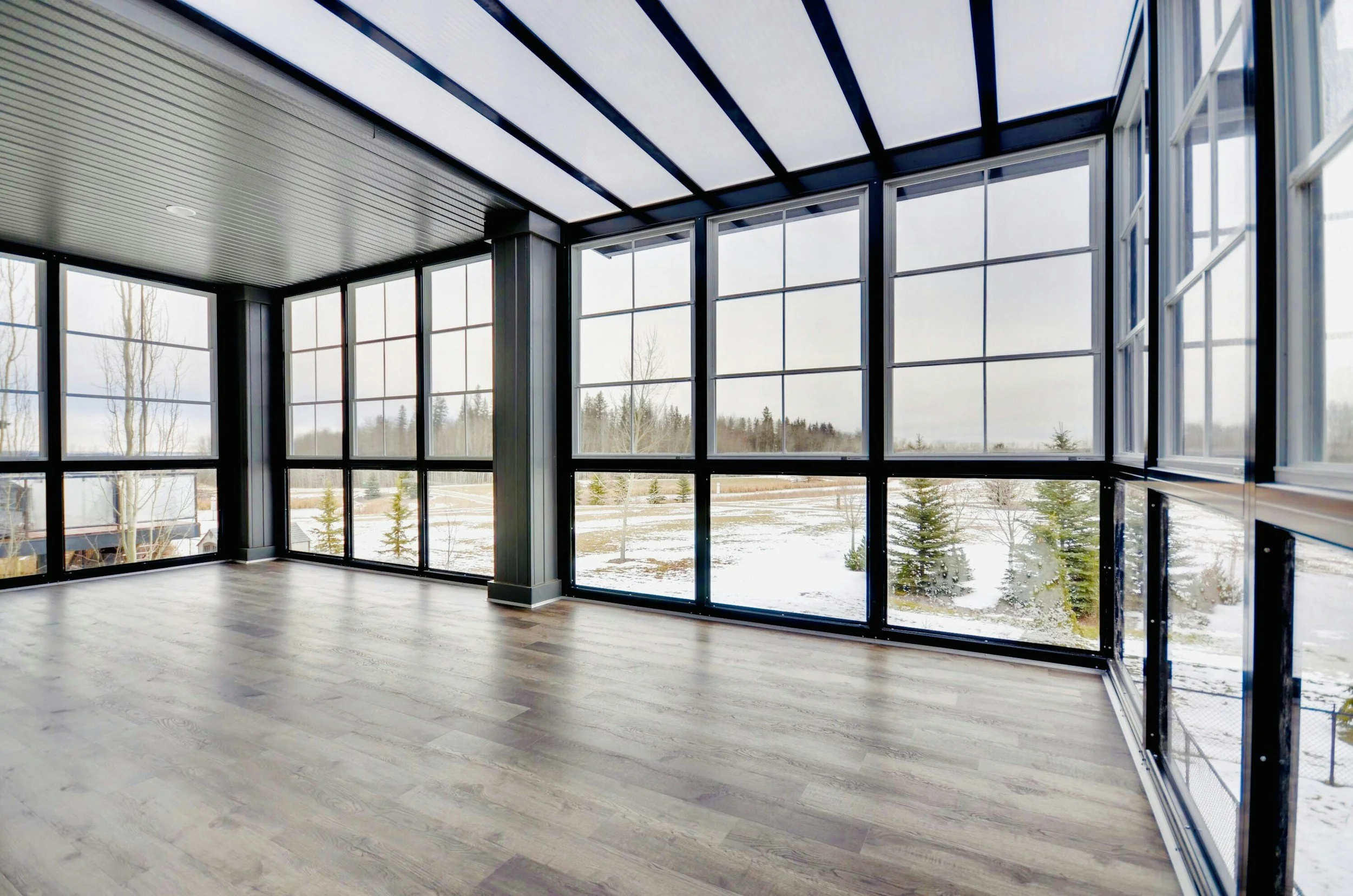
Foundation of the design language.
1. Flooring: The Foundation of the Entire Home
Flooring is often treated as a finish. In reality, it is the foundation of the design language.
It is the one element that touches nearly every room, connects spaces, and sets the tone for everything layered on top—cabinetry, wall color, furniture, and even lighting.
In luxury homes today, we’re seeing a clear preference for wide-plank European white oak in soft, matte finishes. The appeal is not just aesthetic—it’s atmospheric. These floors create warmth without heaviness, texture without distraction, and continuity without feeling too repetitive.
Wider planks and longer lengths minimize visual interruption. Subtle tonal variation adds depth. A matte finish absorbs light rather than reflecting it, contributing to a more relaxed, lived-in elegance.
More importantly, flooring decisions influence everything downstream:
Cabinet tones are selected in relationship to the floor
Wall colors are adjusted to complement undertones
Transitions between spaces are simplified—or eliminated entirely
When flooring is chosen early and with intention, the entire home feels more cohesive.
When it’s chosen late, everything else becomes a compromise.
2. Cabinetry: Where Craftsmanship Becomes Visible
Cabinetry is one of the most prominent and most used elements in a home. It is also where the difference between standard and custom becomes immediately apparent.
In a luxury remodel, cabinetry isn’t just about storage—it’s about proportion, detail, and presence.
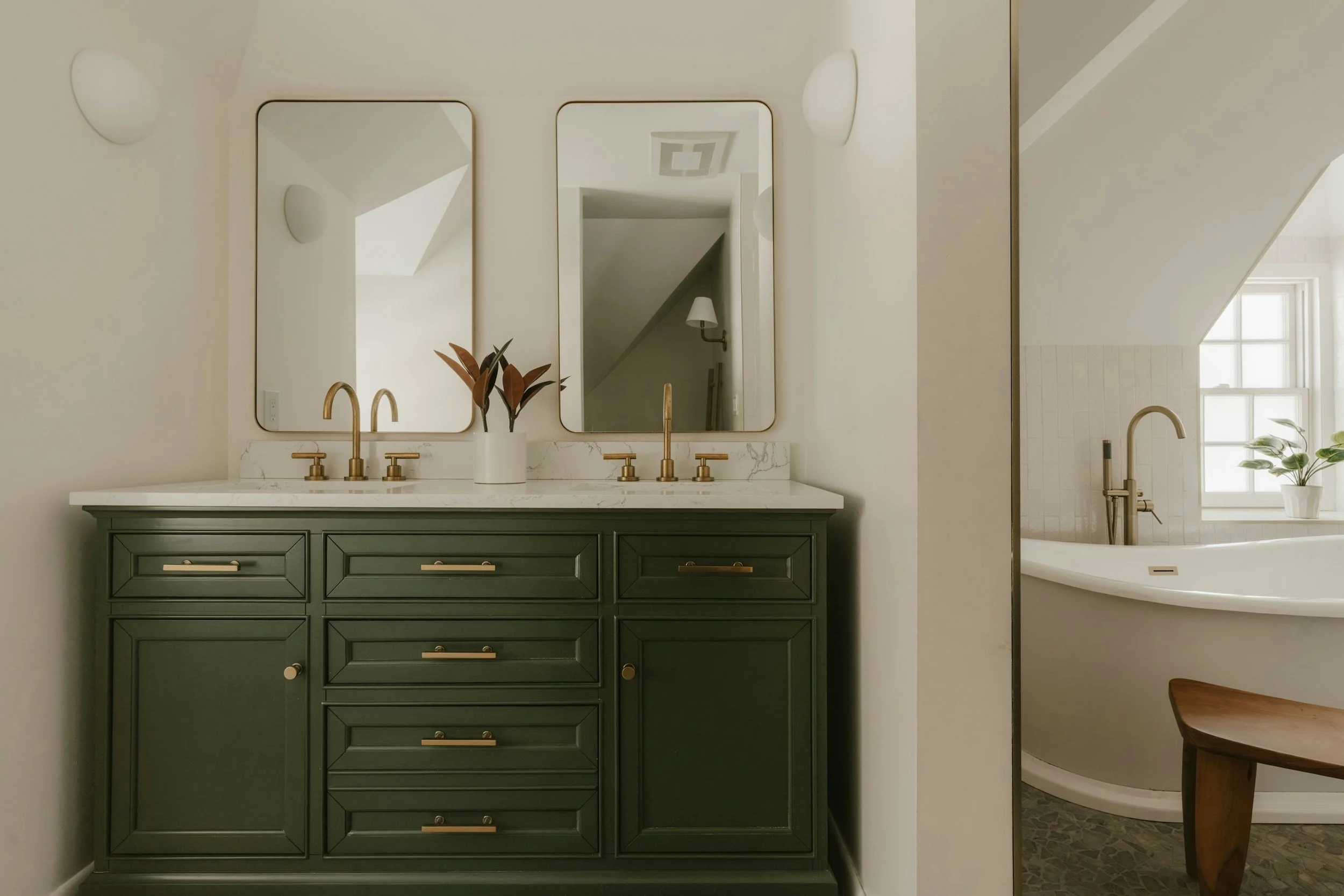
A defining architectural feature—not just a functional component.
The first decision is structural:
Full overlay for a clean, contemporary look
Inset for a more tailored, architectural feel
Frameless vs framed construction
Then comes the design language:
Door style (flat panel, refined shaker, reeded, or fully custom profiles)
Edge details and reveals
Integrated hardware vs statement pulls
Finally, there’s the finish:
Painted vs stained
Natural wood vs tonal color palettes
Consistency vs intentional contrast (e.g., island vs perimeter)
What separates high-end cabinetry is not just material—it’s restraint and precision. Reveals are intentional. Lines align. Proportions feel balanced.
When cabinetry is thoughtfully designed from the beginning, it becomes a defining architectural feature—not just a functional component.
3. The Material Palette: Creating Cohesion Through Restraint
One of the most common mistakes in remodeling is trying to do too much.
A luxury home rarely relies on a wide variety of materials. Instead, it’s built around a tight, intentional palette—typically three to four core finishes that repeat and reinforce each other throughout the space.
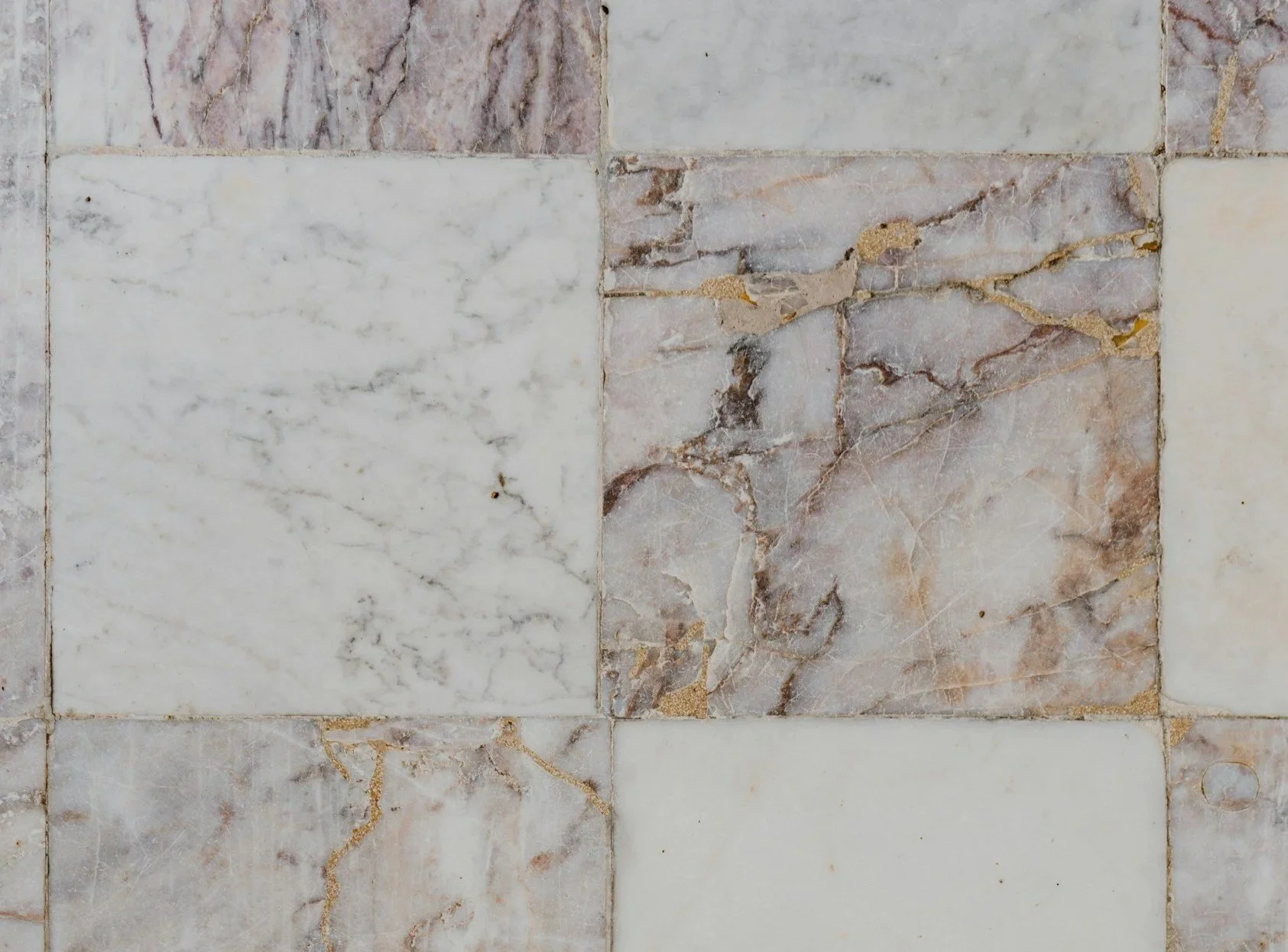
Each selection reinforces the overall vision.
This might include:
A primary stone (marble, quartzite, or quartz)
A wood tone (flooring and/or cabinetry)
A metal finish (plumbing, hardware, lighting)
A wall treatment (paint, plaster, or subtle texture)
The goal is not uniformity—it’s cohesion.
For example:
A warm white oak floor might pair with a soft taupe cabinet and a honed marble countertop
Champagne bronze or polished nickel fixtures might repeat across kitchen, bath, and bar areas
Wall tones are selected to bridge these materials rather than compete with them
When the palette is established early, decisions become easier. Everything has a reference point. Each new selection reinforces the overall vision.
Without a defined palette, the process becomes reactive. Materials are chosen in isolation, and the final result often feels disjointed.
Luxury is not about more—it’s about editing with intention.
4. Lighting Strategy: Designing the Atmosphere
Lighting is one of the most transformative—and most overlooked—elements in a home.
Many homeowners think in terms of fixtures: pendants, chandeliers, sconces.
But in high-end design, the real focus is lighting strategy—how light is layered, controlled, and integrated into the architecture.
A well-designed lighting plan typically includes three layers:

Layered, controlled, and integrated into the architecture.
Ambient Lighting
The general illumination of a space—often achieved through recessed lighting or indirect sources.
Task Lighting
Focused light where function matters—under-cabinet lighting in kitchens, vanity lighting in bathrooms, reading lights in living areas.
Accent Lighting
The layer that adds depth and drama—highlighting textures, artwork, millwork, or architectural features.
Increasingly, we’re incorporating:
Integrated LED strips within cabinetry and shelving
Cove lighting in ceilings to create soft, indirect glow
Backlighting for mirrors, bars, and feature walls
The goal is to avoid reliance on a single overhead source and instead create a dynamic environment that shifts throughout the day.
Lighting affects:
How materials appear (warm vs cool tones)
How large or intimate a space feels
The overall mood of the home
When planned early, lighting becomes seamless and architectural.
When added late, it becomes decorative—and often insufficient.
5. Architectural Details: The Difference You Feel, Not Just See
If flooring sets the tone and cabinetry defines function, architectural details are what elevate a home from well-designed to truly custom.
These are the elements that don’t always stand out individually—but collectively create a sense of depth, craftsmanship, and permanence.
They include:
Trim profiles and baseboards
Door and window casings
Ceiling treatments (beams, coffers, subtle transitions)
Wall details (paneling, plaster, niches)
Built-ins and integrated storage
In many homes, these details are either minimal or inconsistent.
In a luxury remodel, they are intentional.
For example:
A simple shift from standard baseboards to a more refined profile can change the perceived quality of an entire space
A built-in media wall or shelving system can anchor a room and eliminate the need for furniture
Subtle wall paneling can add texture without overwhelming the design
These decisions require planning. They affect framing, drywall, millwork, and finish schedules.
But more importantly, they affect how the home feels.
This is where craftsmanship becomes experiential.
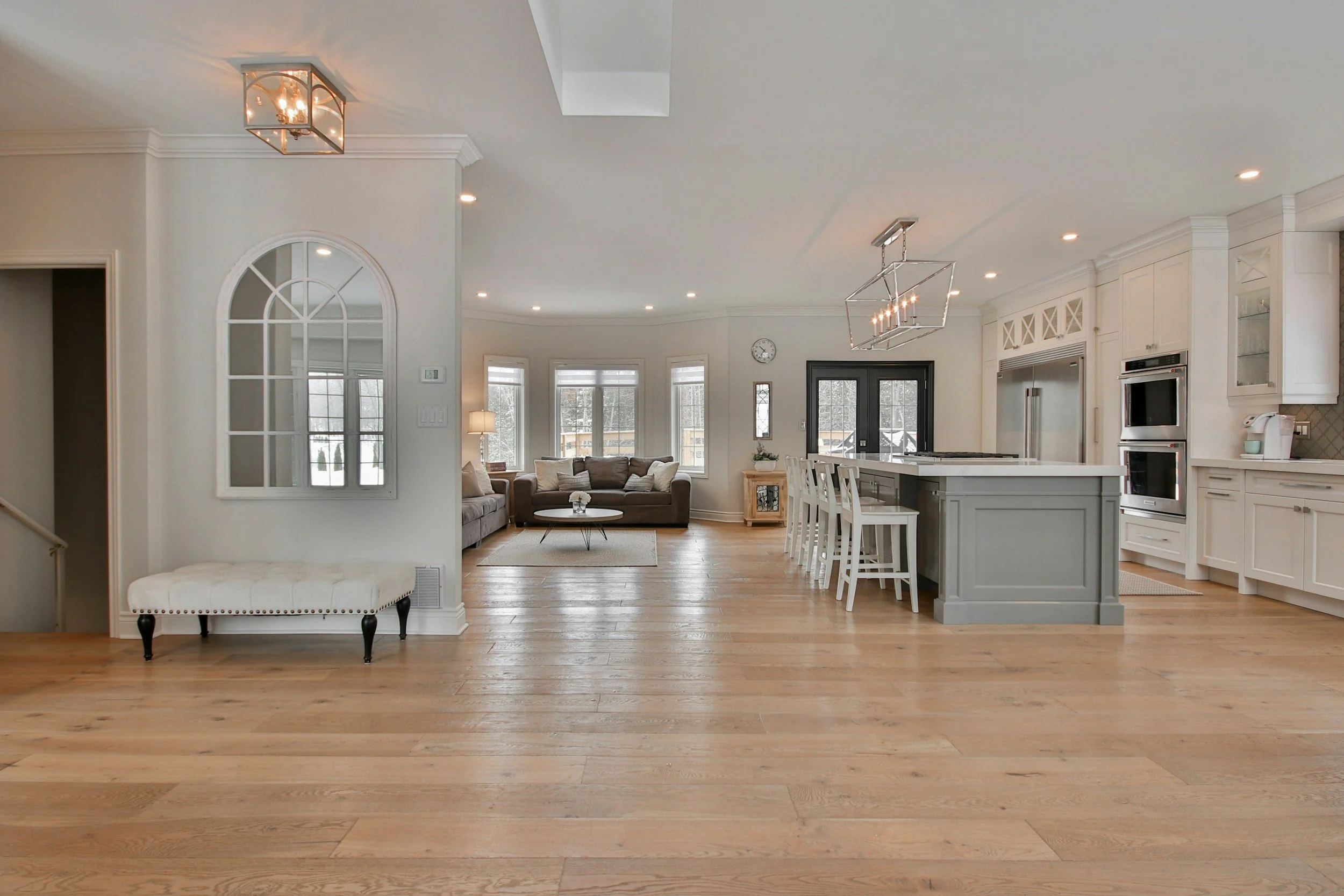
The true impact comes from how design elements work together.
Why These Decisions Matter—And When They Should Happen
Each of these five areas—flooring, cabinetry, material palette, lighting, and architectural details—is powerful on its own.
But their true impact comes from how they work together.
When decisions are made early and in coordination:
The design feels cohesive
The construction process is smoother
Budget surprises are minimized
The final result feels intentional and complete
When decisions are delayed:
Trade-offs become inevitable
Costs increase due to changes and inefficiencies
The design loses clarity
This is why the most successful remodels don’t begin with demolition.
They begin with design alignment.
Where It All Comes Together
At Twin Spires, this phase happens during our Discovery process.
It’s where we take the time to:
Define the design direction
Establish the material palette
Align on key architectural and functional decisions
Coordinate with trade partners to ensure feasibility
By the time construction begins, there is a clear roadmap.
Not just of what the home will look like—but of how it will function, feel, and endure over time.
Final Thought
A luxury remodel is not defined by how much is spent.
It’s defined by how well decisions are made.
The homes that feel effortless, refined, and timeless are not the result of last-minute inspiration. They are the result of thoughtful planning, disciplined design, and a clear vision from the start.
Before the first wall is opened, before materials are delivered, before schedules are set—these five decisions quietly determine everything that follows.
Make them early. Make them intentionally. And the rest of the process becomes not only smoother—but far more rewarding.
